Friday, September 6, 2013

In Gut Research’s Latest Advance, Bacteria From Thin Humans Can Slim Mice Down


The trillions of bacteria that live in the gut — helping digest foods, making some vitamins, making amino acids — may help determine if a person is fat or thin.
The evidence is from a novel experiment involving mice and humans that is part of a growing fascination with gut bacteria and their role in health and diseases like irritable bowel syndrome and Crohn’s disease. In this case, the focus was on obesity. Researchers found pairs of human twins in which one was obese and the other lean. They transferred gut bacteria from these twins into mice and watched what happened. The mice with bacteria from fat twins grew fat; those that got bacteria from lean twins stayed lean.
The study, published online Thursday by the journal Science, is “pretty striking,” said Dr. Jeffrey S. Flier, an obesity researcher and the dean of the Harvard Medical School, who was not involved with the study. “It’s a very powerful set of experiments.”
Michael Fischbach of the University of California, San Francisco, who also was not involved with the study, called it “the clearest evidence to date that gut bacteria can help cause obesity.”
“I’m very excited about this,” he added, saying the next step will be to try using gut bacteria to treat obesity by transplanting feces from thin people.
“I have little doubt that that will be the next thing that happens,” Dr. Fischbach said.
But Dr. Flier said it was far too soon for that.
“This is not a study that says humans will have a different body weight” if they get a fecal transplant, he said. “This is a scientific advance,” he added, but many questions remain.
Dr. Jeffrey I. Gordon of Washington University in St. Louis, the senior investigator for the study, also urged caution. He wants to figure out which bacteria are responsible for the effect so that, eventually, people can be given pure mixtures of bacteria instead of feces. Or, even better, learn what the bacteria produce that induces thinness and give that as a treatment.
While gut bacteria are a new hot topic in medicine, he added that human biology is complex and that obesity in particular has many contributors, including genetics and diet.
In fact, the part of the study that most surprised other experts was an experiment indicating that, with the right diet, it might be possible to change the bacteria in a fat person’s gut so that they promote leanness rather than obesity. The investigators discovered that given a chance, and in the presence of a low-fat diet, bacteria from a lean twin will take over the gut of a mouse that already had bacteria from a fat twin. The fat mouse then loses weight. But the opposite does not happen. No matter what the diet, bacteria from a fat mouse do not take over in a mouse that is thin.
Although researchers suspected that gut bacteria might play a role in human obesity, it has been difficult to get convincing evidence. While there are often differences in gut bacteria in fat and lean people, they could be a cause or an effect of obesity. And gut bacteria vary from individual to individual, making it very difficult to decide which, if any, affect body weight.
Those obstacles led Dr. Gordon and his colleagues to look for those rare sets of twins in which only one twin is fat. That allowed them to cancel out much of the effect of genetics and environment. They gave the twins’ fecal bacteria to mice that were born and reared in a sterile environment and had no bacteria of their own as a result. The mice were genetically identical, so genetic factors played no role in their weights.
Five weeks after they got human gut bacteria, the mice with bacteria from the fat twins had about 15 to 17 percent more body fat than those that had bacteria from thin twins. They also had some of the metabolic changes associated with obesity.
Next came what Dr. Gordon calls the “Battle of the Microbiota,” referring to the collection of gut microbes. The researchers put mice with gut bacteria from lean twins in the same cage as mice with gut bacteria from obese twins. Mice housed together eat one another’s droppings, so the mice in the cage naturally end up sharing gut bacteria. He also put in germ-free mice to determine which collection of gut bacteria they would get. Or would they get a mixture?
That led to the discovery that bacteria from the lean twins took over in the mice that started out with bacteria from the fat twins, resulting in weight loss and a correction of the metabolic abnormalities the mice had developed. But the mice were eating standard mouse food, which is very low in fat.
Then Dr. Gordon’s colleague Vanessa K. Ridaura had an idea. From a national survey about what Americans eat, she and her colleagues determined the diets of those eating the most fruits and vegetables and the least saturated fats and the diets of those at the opposite end of the spectrum. With that information, they created mouse food pellets of the same two compositions by cooking and drying fruits and vegetables and combining them with fats in the right proportions. They then repeated the experiment, putting fat and lean mice together in a cage and giving them one of the two types of food.
The fat mice that got food high in fat and low in fruits and vegetables kept the gut bacteria from the fat twins and remained fat. The thin twins’ gut bacteria took over only when the mice got pellets that were rich in fruits and vegetables and low in fat.
“This is all weird and wonderful,” said Robert W. Karp, a program director for genetics and genomics at the National Institute of Diabetes and Digestive and Kidney Diseases.
And it raises questions of what comes next.
Dr. Gordon’s plan to isolate the bacteria or their products responsible for leanness “could take many decades,” said Dr. Alexander Khoruts, a gastroenterologist at the University of Minnesota.
“I am not down on this approach,” Dr. Khoruts said, but added that it would be a lot quicker to try fecal transplants. They have worked in one situation: people with a terrible gut infection with the bacteria Clostridium difficile get better when given feces from healthy people.
Those were people with no other treatment options, Dr. Karp noted, but, he said, perhaps obese people who have not done well after bariatric surgery might be in the same desperate situation.
“Maybe we could try it out very, very gingerly, very, very carefully,” Dr. Karp said, noting that that was his personal opinion.
But he added that he was not sure weight loss centers would take that cautious approach.
“It would not surprise me if someone somewhere starts doing it,” Dr. Karp said.

Tuesday, September 3, 2013


Many deaths from heart disease, stroke could be avoided


About 200,000 deaths a year from cardiovascular disease could be avoided with lifestyle changes.


About 800,000 people die each year from cardiovascular disease. But as many as 200,000 of the deaths from heart disease and stroke could be prevented if people made healthy changes including stopping smoking, maintaining a healthy weight, doing more physical activity, eating less salt and managing their high blood pressure, high cholesterol and diabetes, says a government report out today.
Although the rate of death (deaths per 100,000 people) from cardiovascular disease declined by 29% between 2001 and 2010, it's still the leading cause of death in the USA, says the report from the Centers for Disease Control and Prevention (CDC). It accounts for one in three deaths in this country.
"These findings are really striking because we are talking about hundreds of thousands of deaths that don't have to happen when they happen," says Thomas Frieden, director of the CDC.
For the latest analysis, CDC researchers looked at National Vital Statistics System mortality data from the period 2001-2010.
Preventable/avoidable deaths were defined as all deaths from heart disease and stroke in people under age 75 because if their risk factors (smoking, blood pressure, high cholesterol, obesity, physical inactivity) had been under control they should have lived longer, says the lead author Linda Schieb, a CDC epidemiologist. The current life expectancy in the USA is age 78 so if people died sooner than that it is considered early or premature, she says.
• About 56% of preventable deaths from cardiovascular disease (112,000 deaths) in 2010 occurred in people under 65 years old. That number remained about the same between 2001 and 2010.
• The number of preventable deaths from heart disease and stroke decreased by 25% between 2001 and 2010 for people ages 65 to 74.
• Still, the highest overall death rate from cardiovascular disease was in the 65-74 age group with 401.5 deaths from cardiovascular disease per 100,000 people.
• Men have the highest risk of death from heart disease and stroke across all races and ethnic groups. Black men are most at risk.
• Blacks are nearly twice as likely as whites to die early from heart disease and stroke.
• Compared with whites, blacks have a higher prevalence of cardiovascular risk factors including high blood pressure, type 2 diabetes, obesity, physical inactivity, low consumption of fruit and vegetables and poor control of bad (LDL) cholesterol.
• Rates of preventable death from heart disease and stroke are highest in the South.
It's unfortunate that your longevity may be influenced more by your "ZIP code" than "genetic code," Frieden says.
He says preventable death rates may decrease when more people have health coverage and access to screening and treatment through the Affordable Care Act.
"This report shows we're making some improvements, but we're not making enough improvements especially for people at high risk such as black men and women," says preventive cardiologist Gina Lundberg, an assistant professor of medicine at the Emory University School of Medicine in Atlanta.
"Americans need to take better control of their health and be more aggressive in controlling their blood pressure, their cholesterol, their weight, their exercise habits — and to stop smoking," she says.
Cardiologist Mariell Jessup, president of the American Heart Association, says the biggest barriers to success in changing this trend are projected increases in obesity and type 2 diabetes, and only modest improvements in diet and physical activity. "Despite progress in smoking, high cholesterol and high blood pressure rates, obesity and diabetes are on the rise and must be addressed for heart disease and stroke deaths to drop 20% by 2020, a major American Heart Association goal."
The CDC recommends:
• People have a conversation with a health care provider about the ABCS (aspirin when appropriate, blood pressure control, cholesterol management and smoking cessation) of heart health to help control blood pressure and high cholesterol, including taking medications as directed.
• If you don't smoke, don't start. If you do smoke get help to quit.
• Try going for a brisk 10-minute walk, three times a day, five days a week.
• Eat a heart-healthy diet, high in fruits and vegetables and low in sodium and trans fats.
• Work to maintain a healthy weight.
• Know the signs and symptoms of heart attack and stroke and get help as needed.
According to the American Heart Association, most heart attacks involve discomfort in the center of the chest that lasts more than a few minutes, or that goes away and comes back. It can feel like uncomfortable pressure, squeezing, fullness or pain. Symptoms can include pain or discomfort in one or both arms, the back, neck, jaw or stomach. It may include shortness of breath with or without chest discomfort. Other signs may include breaking out in a cold sweat, nausea or lightheadedness.
The heart association says that signs of a stroke include face drooping, arm weakness or numbness and speech difficulty.

Friday, August 30, 2013

Pick Blueberries or Apple Over Juice to Cut Diabetes Risk

August 29, 2013

BLUEBERRIES
Blueberries, like these arranged for this photo in Groton, Connecticut. Photographer: Claudia DiMartino/Bloomberg
If you want to reduce your chances of becoming a diabetic, you’re better off munching apples or blueberries instead of sipping fruit juice, researchers found.
Eating more blueberries, apples and grapes was shown to lower the risk of developing Type 2 diabetes, while increased consumption of fruit juice was linked to a higher risk, according to a study published in The BMJ.
People should “replace fruit juice with solid fruits, maintaining the same energy level” while substituting a less healthy option with a healthier one, Qi Sun, the senior author of the study, said in a telephone interview. He’s an assistant professor of medicine at Brigham and Women’s Hospital in Boston and Harvard Medical School.
This adds to a growing body of evidence that eating fruit is beneficial for health, and is the strongest confirmation to date that it can also lower Type 2 diabetes risk.
Previous studies showed links between increased fruit consumption and a lower risk of cardiovascular disease, metabolic syndrome and hypertension. According to one published last year in the Annals of Neurology, berries are good for the brain and can help fend off the mental decline of aging.
For the study published today, researchers from the U.K., the U.S. and Singapore set out to examine the relations between consumption of different kinds of fruits and diabetes, analyzing data from three groups of U.S. nurses and health workers who were surveyed about their eating habits and physical activity over the course of about two decades. The participants included 151,209 women and 36,173 men.

Three Groups

The results are convincing as they are consistent among the three groups, said Sun, also an assistant professor in the Department of Nutrition at the Harvard School of Public Health.
Among study participants who had three servings a week of blueberries, grapes, raisins, apples and pears rather than juice, the risk of diabetes was reduced by 7 percent, the study showed.
The study is part of a body of evidence showing benefits from fruit. Eating at least 2 1/2 cups of vegetables and fruits a day is associated with lower risk of carduivascular disease, according to U.S. government dietary guidelines, which encourage the increased consumption of fruit. Most Americans don’t eat enough fruit, according to the guidelines, which were last updated in 2010.
Fruit juices are probably less healthy for a number of reasons, Sun said. In the juicing processes, some beneficial nutrients, for example flavonoids and dietary fibers, are lost, he said. Juices also pass through the gastrointestinal tract more quickly, leading to more rapid and more dramatic changes in blood sugar and insulin levels after eating, he said.

Eating Habits

Researchers asked about consumption of grapes or raisins, peaches, plums or apricots, prunes, bananas, cantaloupe, apples or pears, oranges, grapefruit, strawberries and blueberries. The juices used included orange, apple and grapefruit. Participants were submitted a questionnaire every four years to assess their eating habits, and were asked how often they consumed each food in a standard portion size.
Greater consumption of fruit juice was associated with an increased risk of Type 2 diabetes, the most common form of the disease, the study showed. Substitution of juices with fruits was linked with a lower risk, with the exception of strawberries and cantaloupe, the researchers said.
“Some fruits are more beneficial than others, in terms of diabetes prevention,” Sun said. “Based on our data, blueberries, apples, grapes and raisins are preferred.”

Future Studies

Such results will have to be corroborated in future studies, he added.
Diabetes is caused by a lack of insulin the body needs to convert blood sugar into energy. Lifestyle changes around the globe have kindled a surge in cases. The number of sufferers worldwide will reach an estimated 552 million by 2030, according to the International Diabetes Federation.
Some diabetics, suffering from Type 1 diabetes, have a lifelong inability to produce insulin. The Type 2 variant tends to strike later in life, brought on by obesity and sedentary lifestyles, as people become resistant to the insulin their own body produces.
The study was funded by research grants from the National Institutes of Health. Professor Sun also was supported by a career development award from the National Heart, Lung, and Blood Institute.
For Related News and Information: Eating More Berries May Delay Memory Decline, Research Shows

Sunday, August 25, 2013

Is BMI Really The Best Gauge Of Health?
  |


GET HEALTHY LIVING NEWSLETTERS:

Not all fat people are metabolically equal. And a simple number like the body mass index (or BMI) does not take that key fact into account. A growing number of studies over the past few years have made the pitfalls of relying solely on the BMI to make health predictions increasingly clear. The latest--and in some ways most comprehensive--of these reports was published today in the journal Science.

But there's no need to abandon the BMI, which is the calculated by taking your weight in kilograms and dividing it by the square of your height in meters. The formula, which was developed back in the 1800s by a Belgian statistician and sociologist, is still a good first-order approximation of health risk for most people. And there are ways of determining if you fall into one of the groups for which it is not relevant.

The BMI's flaws as a health indicator first attained widespread popular attention when a scientist with the U.S. Centers for Disease Control reported seemingly counterintuitive results based on national mortality statistics. In studies published in 2005 and again in 2013, Katherine Flegal and her co-authors found that people who fall into the overweight but not obese category as measured by the BMI tend to live longer, as a group, than folks who fall into the normal weight range.

Flegal herself cautioned against over-interpreting her results. Once you start delving deeper into the data, you understand why. There is so much variation between individuals in each of the half-dozen usual groupings of BMI numbers that it can mask a wide range of problems. The standard BMI groupings are underweight (less than 18.5), normal (18.5 to 24.9), overweight (25 to 29.9), obesity class I 30 to 34.9, obesity class 2 35 to 39.9 and obesity class 3 (greater than 40).

As the Science paper points out, it is possible to have a normal BMI and be metabolically abnormal, meaning the body has trouble processing various nutrients and other compounds found in the blood. Increasingly, researchers are documenting the many ways that insulin resistance, for example, increases the risk for heart disease, Alzheimer's disease and other life-shortening ailments. People with a normal BMI who are also alcoholic with fatty liver disease or cirrhosis are simply not healthy by anyone's definition. According to one analysis from 2008, nearly one in four people with a normal BMI are metabolically unhealthy while about half of overweight individuals are metabolically normal.

Where your body stores its excess fat also turns out to be important. Fatty deposits under the skin of the arms or legs, for example, apparently just sort of sits there (it may also trap certain toxic metals and keep them away from vital organs) and doesn't cause much harm. But fatty deposits around the abdomen, or vital organs (like the liver), are much more hazardous to your health.


Rather than throw out the BMI altogether, some researchers think it makes sense to add another measurement--waist circumference--to the mix. This is easier said than done. Basically, you need to place the tape measure around your middle so that it lines up horizontally with the top of your hip bone (the iliac crest) on either side of your body. Then take that measurement (plus your height, weight, sex and age) and plug them into one of several so-called ABSI (A Body Shape Index) calculators that are available on the web.

Other calculations, such as the one that looks at the ratio between your height and waist circumference, try to get at the same thing--do you have more fat distributed around your middle (bad) or beneath the skin on your legs and buttocks (no harm)?

One of the most accurate ways to measure--as opposed to just estimating--the amount of fat in a person's body is to calculate the amount of water that is displaced when you fully submerge a person underwater. But don't try this at home, or you may wind up with a flood on your bathroom floor. Shades of Archimedes!

But even percentage body fat is not the answer to everything. As an article in the August issue of Scientific American by JoAnn E. Manson and colleagues describes in great detail, whether or not you are physically fit also plays an important role in how healthy your metabolism is.

The point is good health depends on a lot of things--starting with wether or not you smoke, how physically fit you are, the kinds and amounts of food you put in your body, your age, surroundings and the company you keep. And sometimes you can do everything right and still become seriously ill. Changing your lifestyle, behavior, weight or body shape can help to reduce the chances that you will die prematurely, but they will never eliminate the risk entirely.

Saturday, August 17, 2013

Heavy coffee consumption linked to higher death risk

Drinking more than 28 cups of coffee a week may be harmful for people younger than 55, according to a study.

SHARE 7208 447 129COMMENTMORE
The debate over coffee's health risks continues to brew. A new study, out Thursday, finds that heavy coffee consumption is associated with a higher death risk in men and women younger than 55.
In the study published online in the journal Mayo Clinic Proceedings, men younger than 55 who drank more than 28 cups of coffee a week (four cups a day) were 56% more likely to have died from any cause. Women in that age range had a twofold greater risk of dying than other women. The study looked at 43,727 men and women ages 20-87 from 1971 to 2002.
"From our study, it seems safe to drink one to three cups of coffee a day," says the study's second co-author Xuemei Sui. "Drinking more than four cups of coffee a day may endanger health," says Sui, assistant professor of exercise science with theArnold School of Public Health at the University of South Carolina in Columbia. She defines a cup of coffee as 6 to 8 ounces.
The study did not find a higher death risk for adults 55 and older. Sui says there may be a bias — the research may not include unhealthy older people because they might have already died.
The reasons for the higher death risk among younger adults are not clear since experts through the years have found both health benefits and problems associated with coffee.
Sui says the caffeine in coffee can elevate heart rate as well as raise blood pressure and blood sugar levels. However, coffee is a major source of antioxidants, she says.
Sui says the study didn't find a significant association between coffee consumption and heart disease death. Further research is needed to look at any connection between coffee and cancer, she says.
Gregg Fonarow, co-chief of clinical cardiology at the David Geffen School of Medicine at UCLA, says, "Differences in other dietary factors, marital status and other socioeconomic factors that were not adjusted for in this study may account for some or all of these observations."
Fonarow, who was not involved in this research, says observational studies that survey people about their coffee intake and tie that to how many died from any cause have yielded mixed results.
Consider a 2012 study that found that coffee drinkers ages 50-71 had a lower risk of death than their peers who did not consume coffee. In that study, researchers from the National Cancer Institute, part of the National Institutes of Health, and AARP found that the more coffee consumed, the more a person's death risk declined.
Joseph DeRupo, a spokesman for the National Coffee Association of USA, says the new study "presents findings that are out of step with prevailing science as well as with widely accepted research methods."
Because coffee still stirs debate, Sui says more research is needed. In the meantime, people should watch their coffee intake, she says. "Avoid excessive coffee drinking.

Sunday, August 4, 2013


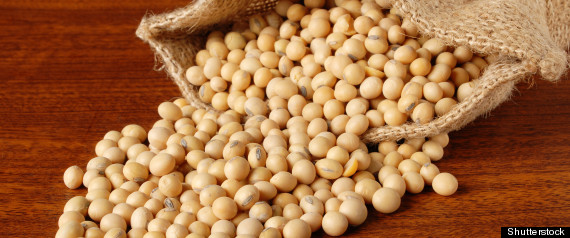
Soybean Compound Genistein Shows Promise For Treating HIV


compound derived from soybeans could be promising in treating HIV, according to a new study.
Plus, the method by which the compound -- called genistein -- stops infection could help to alleviate drug-resistance issues because it acts in a different way from current HIV treatments, said researchers from George Mason University, Tulane University Health Sciences Center, and the National Institute of Allergy and Infectious Diseases.
"Instead of directly acting on the virus, genistein interferes with the cellular processes that are necessary for the virus to infect cells," study researcher Yuntao Wu, a professor at the National Center for Biodefense and Infectious Diseases, which is based at George Mason, said in a statement. "Thus, it makes the virus more difficult to become resistant to the drug. Our study is currently [in] its early stage. If clinically proven effective, genistein may be used as a complement treatment for HIV infection."
However, Wu explained that the research is still too early to say that eating a lot of soybeans could actually help people who currently have HIV, as the amount of genistein needed to stop HIV is still uncertain.
The study, published in the journal Retrovirology, involved exposing a type of cell, called CD4 T cells, to genistein, and then seeing if it stopped the cells from being infected with HIV.
Recently, soybeans were in the news for their potential in stopping another deadly disease -- cancer. Researchers from the University of Arkansas in Fayetteville found that soybean meal peptides -- which is what's left over after oil is extracted from soybean seeds -- seem to be able to stop lung, liver and colon cancer growth in a lab setting

Friday, July 26, 2013

Secret of Usain Bolt's speed unveiled

Scientists say they can explain Usain Bolt's extraordinary speed with a mathematical model.
His 100m time of 9.58 seconds during the 2009 World Championships in Berlin is the current world record.
They say their model explains the power and energy he had to expend to overcome drag caused by air resistance, made stronger by his frame of 6ft 5in.
Writing in the European Journal of Physics, the team hope to discover what makes extraordinary athletes so fast.
According to the mathematical model proposed, Bolt's time of 9.58 seconds in Berlin was achieved by reaching a speed of 12.2 metres per second, equivalent to about 27mph.
Less dynamic
The team calculated that Bolt's maximum power occurred when he was less than one second into the race and was only at half his maximum speed. This demonstrates the near immediate effect of drag, which is where air resistance slows moving objects.
They also discovered less than 8% of the energy his muscles produced was used for motion, with the rest absorbed by drag.
When comparing Bolt's body mass, the altitude of the track and the air temperature, they found out that his drag coefficient - which is a measure of the drag per unit area of mass - was actually less aerodynamic than that of the average man.
Effects of drag
Jorge Hernandez of the the National Autonomous University of Mexico said: "Our calculated drag coefficient highlights the outstanding ability of Bolt. He has been able to break several records despite not being as aerodynamic as a human can be.
"The enormous amount of work that Bolt developed in 2009, and the amount that was absorbed by drag, is truly extraordinary.
"It is so hard to break records nowadays, even by hundredths of a second, as the runners must act very powerfully against a tremendous force which increases massively with each bit of additional speed they are able to develop.
"This is all because of the 'physical barrier' imposed by the conditions on Earth. Of course, if Bolt were to run on a planet with a much less dense atmosphere, he could achieve records of fantastic proportions.
"The accurate recording of Bolt's position and speed during the race provided a splendid opportunity for us to study the effects of drag on a sprinter.
"If more data become available in the future, it would be interesting to see what distinguishes one athlete from another," added Mr Hernandez.
Bolt's time in Berlin was the biggest increase in the record since electronic timing was introduced in 1968.
Large stride
John Barrow at Cambridge University who has previously analysed how Bolt could become even faster, explained that his speed came in part due his "extraordinary large stride length", despite having such an initial slow reaction time to the starting gun.
"He has lots of fast twitch muscle fibres that can respond quickly, coupled with his fast stride is what gives him such an extraordinary fast time."
He said Bolt has lots of scope to break his record if he responded faster at the start, ran with a slightly stronger tail-wind and at a higher altitude, where there was less drag.
Bolt's Berlin record was won with a tail wind of only 0.9m per second, which didn't give him "the advantage of helpful wind assistance", he added.
"You're allowed to have a wind no greater than 2m per second to count for record purposes, so without becoming any faster he has huge scope to improve," Prof Barrow told BBC News.